The Quick Rundown
- The Baseline Timeline: For low-competition niches, expect initial ranking movements within 3 to 4 months, and solid page-one rankings within 6 to 9 months, assuming a technically sound website and consistent content velocity.
- The Google Sandbox Reality: New domains almost universally experience a 3 to 6 month trust evaluation period where rankings are suppressed, regardless of content quality. This is a safeguard, not a penalty.
- What Low Competition Actually Means: A keyword is only low competition if your specific site has the authority and content capability to beat the current ranking pages. It is not just a low Keyword Difficulty (KD) score in an SEO tool.
- The Compounding Effect: SEO momentum builds over time. Work done in months 1 through 3 often yields its most significant traffic and revenue returns in months 6 through 12 and beyond.
- How to Accelerate Results: To outpace the standard timeline, focus on aggressive technical SEO fixes, target hyper-specific long-tail queries (e.g., audience plus use case), and establish a consistent publishing cadence that builds topical authority fast.
Are Your DIY SEO Efforts Feeling More Like DOA?
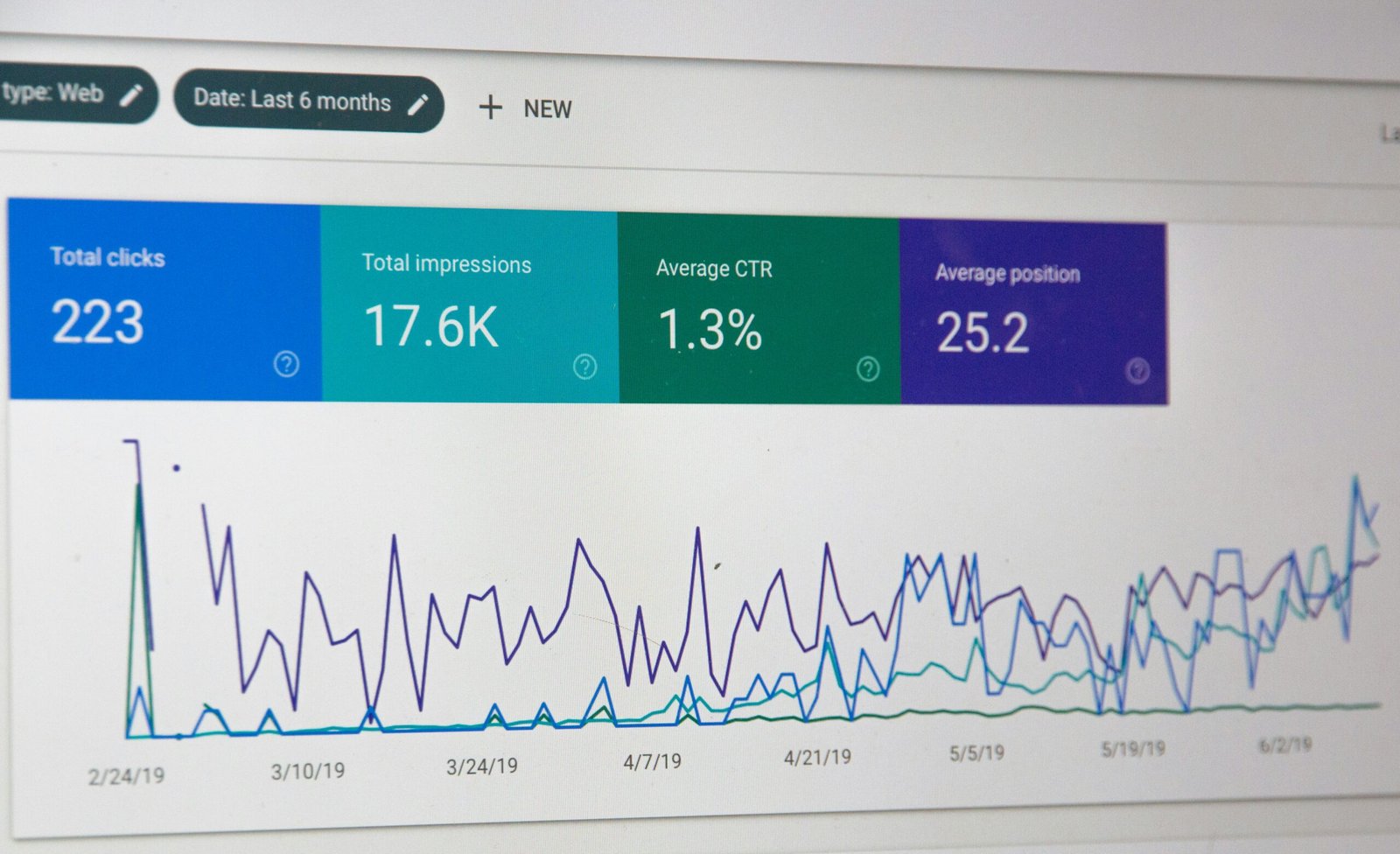
Every website owner hits a breaking point. You launch a site, publish a dozen articles targeting what SEO tools claim are easy keywords, and watch a flatline of zero clicks in Google Search Console for weeks. The immediate, panicked question is always the same: How long does this actually take?
The digital marketing space is crowded with generic promises and wishy-washy timelines. Agencies will tell you to wait, while quick-fix gurus promise page-one rankings in 30 days. Both are misleading. At Outpace, we rely on hard data and proven methodologies.
When you target low-competition niches, the timeline to profitability is absolutely shorter than in hyper-competitive markets like finance or SaaS. Shorter does not mean instant. Search engines do not trust anyone quickly. If you want to dominate a low-competition market, you need to understand exactly how Google evaluates new content, what low competition actually means in 2026, and the precise month-by-month timeline you must follow to drive revenue.
The Reality of Low Competition in 2026
Before establishing a timeline, we must confront the reality of the market. Most people approach low-competition keyword research backward. They open a tool like Ahrefs or Semrush, sort by the lowest Keyword Difficulty (KD) score, grab the term with the highest search volume, and start writing. Six months later, nothing ranks.
The problem is the fundamental misunderstanding of competition.
A low KD score is merely an estimate, often based primarily on the backlink profiles of the top-ranking pages. A keyword with a KD of 15 might be effortless for a site with established topical authority, yet nearly impossible for a brand-new domain with zero backlinks.
In 2026, a keyword is genuinely low competition only when these specific criteria align:
- It is highly relevant to your core business offering.
- The search intent matches a page type you can actually create (e.g., you have a blog post when the SERP demands an informational guide).
- The current Search Engine Results Page (SERP) is beatable given your specific domain authority.
- The query still has real click potential and has not been entirely cannibalized by AI Overviews or zero-click features.
- The keyword belongs to a broader topical cluster that can compound into more rankings over time.
When you target true low-competition gaps, where the current ranking pages are thin, outdated, or mismatched to user intent, you drastically compress the time it takes to see a return on investment (ROI).
The Month-by-Month SEO Timeline for Low Competition Niches
Search has evolved, but most agencies have not. They apply a one-size-fits-all timeline to every client. Your timeline depends entirely on your starting point. If you are launching a new domain, you must factor in the Google Sandbox effect, a widely observed 3 to 6 month evaluation period where Google suppresses rankings to ensure you are not a churn-and-burn spam site.
If you have an established domain targeting a new, low-competition vertical, your timeline accelerates. Here is the data-backed trajectory you should expect when executing a relentless, integrated SEO strategy.
Months 1 to 2: The Foundation and Trust Phase
The first 60 days are about technical perfection and topical mapping. Search engines cannot reward what they cannot understand.
During this phase, the focus is entirely on technical SEO health and content strategy. You must resolve crawl errors, fix broken links, optimize site architecture, and submit flawless XML sitemaps. You must map out a content cluster targeting hyper-specific, long-tail queries simultaneously.
Do not expect ranking changes here. Impressions in Google Search Console may slowly begin to register, but traffic will remain flat. This is the trust-building phase. Google is indexing your pages and evaluating your site structure.
Months 3 to 4: Early Traction and The Rank Transition
By month three, the groundwork begins to register. For low-competition keywords, this is typically when you break out of the initial sandbox and start seeing measurable movement.
You will likely see pages bounce wildly in the rankings. This volatility is normal and is often referred to as rank transition. Google intentionally phases ranking changes over time to test how users interact with your pages and to prevent SEO manipulation.
During this window, you should see long-tail keywords climbing onto pages two and three of the SERPs. Impressions will increase significantly. If you have targeted exceptionally weak SERPs, you may secure your first page-one rankings for highly specific queries.
Months 5 to 6: Measurable Growth and Revenue Impact
This is the inflection point. The trust has been established, the technical foundation is solid, and the content velocity is proving your topical authority.
For low-competition niches, months five and six are when organic traffic shows consistent, upward momentum. Pages that were fluctuating on page two will stabilize on page one. Products or service pages will begin ranking for transactional keywords, creating direct conversion opportunities.
Many businesses achieve their first consistent, SEO-driven ROI at this stage. The traffic is a reliable stream of qualified leads.
Month 6 and Beyond: The Compounding Effect
After six months, SEO becomes a compounding growth engine. The content you published in month two is established, earning passive backlinks, and driving steady traffic.
Because you have built topical authority, every new piece of content you publish will rank faster and with less effort. Search engines trust your domain. You can begin expanding your strategy to target medium-competition keywords, using the authority you built in the low-competition trenches to dominate broader markets.
| SEO Phase | Timeline | Primary Focus | Expected Outcomes |
| Foundation | Months 1-2 | Technical SEO, Keyword Strategy, Initial Publishing | Indexing, zero to minimal traffic, trust evaluation. |
| Early Traction | Months 3-4 | Content Velocity, Internal Linking, On-Page Optimization | Increased impressions, ranking volatility, early long-tail visibility. |
| Measurable Growth | Months 5-6 | Authority Building, Conversion Optimization | Page-one rankings for low-competition terms, consistent traffic growth, initial ROI. |
| Compounding | Months 6+ | Topical Expansion, Medium-Competition Targeting | Rapid ranking for new content, passive link acquisition, scaled revenue. |
How to Outpace the Standard Timeline
You cannot force Google to move faster, but you can remove the friction that slows it down. If you want to maximize your speed to market in a low-competition niche, you must execute flawlessly.
1. Fix Technical Blockers Immediately
Technical optimization is the fastest way to accelerate results. If your site has a convoluted architecture, slow load times, or redirect loops, Google will waste its crawl budget and delay indexing your most critical pages. A site with pristine technical health creates a clear pathway for search engines, signaling that your site is ready to be ranked.
2. Dominate the Micro-Niche
Do not target broad low-competition terms. Go deeper. Use audience modifiers and specific use cases. Instead of targeting “plumbing software” (high competition), target “invoicing software for two-person plumbing teams”. These hyper-specific queries have lower search volume, but they convert at massive rates and can rank in a fraction of the time.
3. Establish Relentless Content Velocity
Publishing one article a month will not build topical authority. You must cover a topic exhaustively. If you identify a low-competition cluster, build out the entire hub of content rapidly. When Google sees comprehensive, interconnected content answering every facet of a user’s query, it awards authority much faster.
The Bottom Line: Stop Waiting, Start Executing
SEO is math and momentum. For low-competition niches, the timeline is clear: expect 3 to 6 months to gain traction and 6 to 12 months to drive significant revenue.
That timeline only applies if you are doing the right work. If you are targeting the wrong keywords, ignoring technical health, or publishing thin content, you will be waiting forever.
With over 18 centuries of cumulative experience and a 98% retention rate, Outpace does not just chase rankings, we drive revenue. We optimize your site architecture not just for search engines, but to remove the friction that kills conversions. We know what works, and we deliver it.