Key Takeaways
- Foundation repair is a high-ticket, high-anxiety purchase. Homeowners spend days or weeks researching cracks, sticking doors, and sloping floors before they call, which makes Google content and reviews central to winning the job.
- The problem is widespread. Research published by HUD cites estimates that expansive soils alone cause more than $15 billion in damage each year, and the USGS reports that land subsidence has directly affected more than 17,000 square miles in 45 states.
- Warning-sign content, such as “stair step cracks in brick” or “doors sticking in summer,” captures homeowners at the start of their research, long before they search for a contractor by name.
- Home sales and inspection reports produce a steady flow of urgent foundation leads. Pages and partnerships built for buyers, sellers, and agents can turn that flow toward your company.
- Track leads through inspections, proposals, and signed contracts. With long decision cycles, follow-up often decides who wins the job.
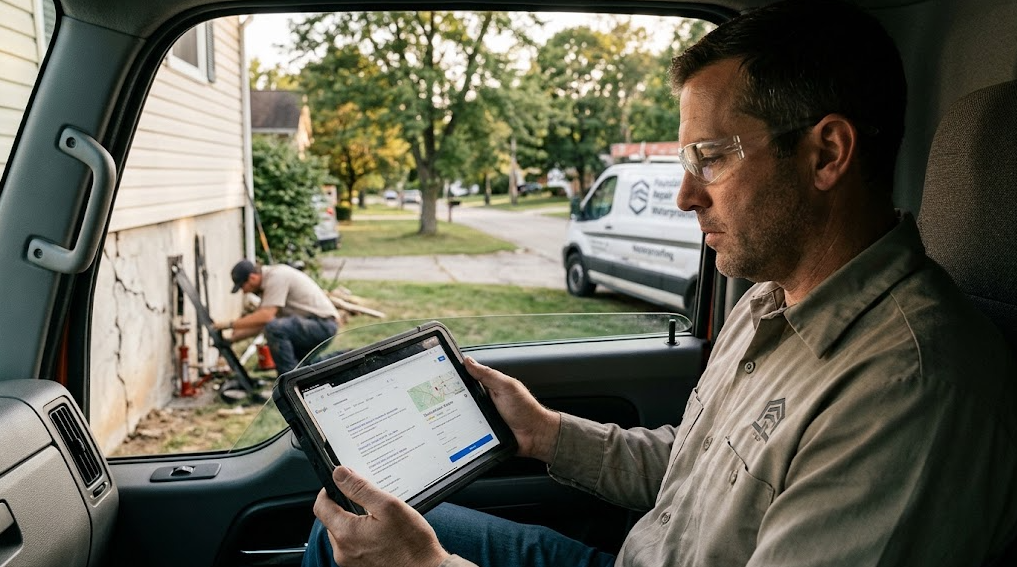
A homeowner notices a diagonal crack running from the corner of a doorway. A few weeks later, the bedroom door starts sticking. Then a home inspector writes “evidence of foundation movement, recommend evaluation by a structural engineer or foundation specialist.” Each of these moments sends people to Google, searching “foundation cracks,” “is this crack serious,” and eventually “foundation repair near me.” The foundation repair company that has answered those earlier questions honestly is the one homeowners trust when they are ready to book an inspection.
This guide explains how foundation repair contractors can turn Google into a reliable source of qualified leads. It covers the Business Profile, Google Maps, organic SEO, content strategy, Local Services Ads and Search ads, reviews, trust building with skeptical homeowners, real estate leads, conversion, landing pages, funnels, tracking, costs, a phased strategy, and a 90-day plan. Whether you focus on pier and beam work, slab repair, basement walls, or crawl spaces, the same principles apply.
How Google Generates Leads for Foundation Repair Companies
Foundation leads come from Google through a longer and more research-heavy path than most home service leads. Understanding that path shapes everything from content to follow-up.
The foundation repair customer search journey
Most foundation jobs start with a symptom, not a service. Homeowners notice cracks in drywall or brick, gaps around windows, doors and windows that stick, uneven or sloping floors, a bowing basement wall, or water entering through cracks. Their first searches describe what they see. Then they move to diagnosis searches such as “signs of foundation problems” and “settling vs foundation damage,” then cost searches like “foundation repair cost,” and finally contractor searches such as “foundation repair company near me” or “foundation inspection [city].” Along the way they read reviews, compare repair methods, ask whether insurance will pay, and wonder whether they need a structural engineer. Many request inspections from several companies before deciding. A second path starts with a third party: an inspection report during a home sale, a lender or insurer, or a city notice. Those leads arrive with deadlines and a clear need.
The Google channels that produce foundation repair leads
Foundation companies can reach homeowners through several Google channels. The table below shows how they compare.
| Channel | Where it shows | Cost model | Best foundation use |
| Google Business Profile | Google Maps and the local pack | Free to create and manage | Inspection calls from near-me searches |
| Organic SEO | Standard search results | Ongoing investment in pages, content, and links | Long research journeys from symptom to contractor |
| Local Services Ads | Top of many local results where the category is available | Per valid lead | Pay-per-lead inspection calls |
| Google Search Ads | Top and bottom of search results | Per click | Filling the inspection calendar across a territory |
| Reviews | Business Profile and Maps | Time and process | Trust in a high-ticket, high-anxiety purchase |
| Content | Organic results for symptoms, causes, methods, and costs | Writing, photos, video, and expertise | Homeowners trying to understand cracks and movement |
1. Optimize Your Google Business Profile for Foundation Repair Leads
A complete Business Profile helps foundation companies appear in Maps and local results and gives homeowners a quick first look at your credibility. Because foundation repair is expensive, homeowners study profiles closely, reading reviews and looking at photos before they call.
Claim, verify, and complete the profile
Claim and verify the profile, then complete the business name, phone, website, hours, service area, services, description, and photos. Use your real business name, since Google’s guidelines prohibit adding keywords or locations to it.
Choose accurate categories
Select the category that best describes your core work. Google offers categories related to foundation and structural repair, waterproofing, and concrete work; choose the closest match as the primary category and add secondary categories only for services you regularly provide, such as basement waterproofing or concrete leveling.
Set your service area
Many foundation contractors cover whole regions rather than a single city. List the counties, cities, or zip codes your inspectors and crews serve regularly, and hide your address if customers do not visit your office, as Google directs for service-area businesses.
List each repair service
Add every service homeowners search for: foundation inspection, slab foundation repair, pier and beam repair, steel push piers, helical piers, concrete pressed piling where you install it, basement wall repair, wall anchors and braces, crawl space stabilization, sagging floor repair, concrete leveling, foundation crack repair, and drainage corrections. Describe each briefly in plain language.
Write a description that answers the big worries
Homeowners worry about cost, being sold work they do not need, and whether repairs will last. Use the description to explain your inspection process, repair methods, warranties and whether they transfer to new owners, engineering partnerships if you have them, and financing. Keep it factual and specific.
Show the work most homeowners never see
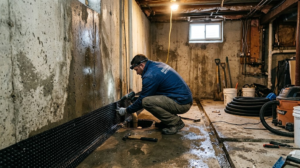
Foundation repairs happen underground or behind walls, so photos are especially valuable. Upload pictures of pier installations, excavations, basement wall braces, crawl space supports, before-and-after floor levels, and crews at work. Add short videos explaining the process. Post updates about seasonal soil movement, rainy seasons, and drought, which can trigger foundation movement in expansive clay areas.
2. Get Foundation Repair Leads From Google Maps
Searches such as “foundation repair near me” and “foundation inspection [city]” trigger the local pack in many markets. Appearing there puts you in front of homeowners ready to schedule an inspection.
How Google ranks local results
Google bases local rankings mainly on relevance, distance, and prominence. Your categories, services, and website content determine relevance. Your location relative to the searcher affects distance. Reviews, links, and mentions across the web build prominence. Google states that businesses cannot pay to rank higher in local results.
Compete across a wide service area
Large territories create a Maps challenge, because visibility weakens with distance from the business location. Strengthen relevance and prominence so your profile competes farther out: build strong location pages for key cities with real projects there, collect reviews from customers across your territory that mention their towns, and earn links from local organizations in those areas. If you operate real offices in multiple cities, each staffed location can have its own verified profile.
Build prominence through relationships
Real estate agents, home inspectors, structural engineers, builders, remodelers, and property managers regularly encounter foundation problems. Relationships with them produce referrals, reviews, and links that strengthen your local presence. Sponsorships, local associations, and educational talks for agents also raise your profile.
3. Rank Your Foundation Repair Website in Google’s Organic Results
Organic search is where most foundation research happens. Homeowners read multiple pages about cracks, causes, methods, and costs before calling anyone, so a site that ranks for those searches earns trust early and captures more inspection requests.
Research keywords across the research journey
Foundation keywords fall into groups that mirror the homeowner’s path.
- Symptom keywords: cracks in foundation, stair step cracks in brick, drywall cracks above door, sticking doors and windows, sloping floors, bowing basement wall.
- Diagnosis keywords: signs of foundation problems, foundation settling vs damage, is my foundation crack serious, when to worry about foundation cracks.
- Method keywords: steel piers, helical piers, slabjacking, polyurethane foam leveling, wall anchors, crawl space supports.
- Cost and insurance keywords: foundation repair cost, pier installation cost, does homeowners insurance cover foundation repair.
- Contractor keywords: foundation repair company, foundation repair near me, foundation inspection.
- Location keywords: foundation repair [city], foundation inspection [city], basement wall repair [city].
Contractor and location keywords bring the most direct leads. Symptom and diagnosis keywords bring more volume and reach homeowners before they choose a company, which matters in a market where trust decides the sale.
Build pages for each repair type and problem
Create dedicated pages with URLs such as /foundation-inspection/, /slab-foundation-repair/, /pier-and-beam-repair/, /helical-piers/, /steel-piers/, /basement-wall-repair/, /crawl-space-repair/, /concrete-leveling/, and /foundation-crack-repair/. Each page should explain the problem it solves, how you diagnose it, the repair process step by step, equipment and materials, warranty terms, what affects price, timelines, before-and-after photos, related reviews, and a clear way to request an inspection. Explaining methods in plain language with diagrams or short videos helps homeowners feel confident about a technical, expensive decision.
Build location pages around soils and housing
Foundation problems vary by place, which gives location pages real substance. A strong page describes the soil conditions common in that area, such as expansive clay, fill soils, or frost-prone ground; typical foundation types in local neighborhoods, such as slabs in newer subdivisions or pier and beam in older homes; seasonal patterns, like movement during drought or after heavy rain; local permit and engineering requirements; and projects and reviews from that city. Pages that only swap the city name look like doorway pages to Google and rarely rank.
Write titles and descriptions that reassure
An effective title might read “Foundation Repair in San Antonio, TX | Free Inspections, Transferable Warranty | [Company Name],” with a meta description such as “Cracks, sticking doors, or sloping floors? Our San Antonio team inspects your foundation, explains the cause, and recommends only the repairs you need.” Adjust offers and warranty claims to what you provide, and write a unique pair for every key page.
Match search intent with depth
Depth wins in this niche. “Signs of foundation problems” results favor thorough, illustrated guides. “Helical vs push piers” results favor balanced comparisons. “Foundation repair cost” results favor clear ranges and explanations of what drives cost. Match each page to the intent and outdo the current results with your own photos, data, and experience.
Keep the site technically sound
Long, image-rich pages need careful technical work. Compress images, lazy-load galleries, keep the phone number and inspection form visible on mobile, use HTTPS, and monitor Search Console for indexing and usability issues.
Link the research path together
Link symptom articles to diagnosis guides, diagnosis guides to the relevant repair pages, repair pages to cost guides and the inspection request page, and location pages to the services offered in each area. Internal links guide homeowners through their research and help Google understand your site.
4. Create Foundation Repair Content That Generates Leads
Content is the engine of foundation repair SEO because the buying journey is so research-heavy. The goal is to become the source homeowners trust while they are still trying to understand what is happening to their house.
Publish warning-sign and symptom content
Write detailed guides for each symptom homeowners notice: diagonal cracks above doors and windows, stair-step cracks in brick or block, horizontal cracks in basement walls, gaps between walls and ceilings, doors that stick or will not latch, sloping floors, cracked tile, chimney separation, and water entering through wall cracks. Explain what each sign can mean, which signs are often cosmetic and which deserve an inspection, and how to monitor a crack over time. Research published in HUD’s Cityscape journal describes how expansive soils shrink and swell with moisture changes and lists symptoms such as cracks, jammed doors, and tilted floors, which gives you an authoritative foundation for these pages.
Explain causes in plain language
Homeowners want to know why their foundation moved. Content about expansive clay soils, poor drainage, plumbing leaks under slabs, tree roots, erosion, frost heave, and poorly compacted fill helps them understand the cause and the fix. The USGS reports that land subsidence has directly affected more than 17,000 square miles in 45 states, with causes including aquifer-system compaction, drainage of organic soils, underground mining, natural compaction, and sinkholes. Local context matters most, so explain the conditions in your area.
Compare repair methods honestly
Comparison content builds credibility in a market where homeowners fear being oversold. Useful topics include steel push piers versus helical piers, concrete piers versus steel piers, slabjacking versus polyurethane foam leveling, wall anchors versus carbon fiber straps versus wall braces, and repair versus monitoring. Explain when each method fits, its limitations, and its typical cost range.
Address cost, insurance, and financing
Cost and insurance questions are among the most searched. Cost guides should explain realistic local ranges and the factors that drive them: the number of piers, foundation type, soil conditions, access, depth to stable soil, engineering requirements, permits, and related plumbing or drainage work. Insurance content must be accurate. Virginia’s state energy and geology agency, for example, notes that standard homeowner’s insurance does not cover damage from expansive soils or frost heave. Advise homeowners to read their own policy and talk with their insurer, and explain your financing options clearly if you offer them.
Create content for real estate situations
Buyers, sellers, and agents search for help when an inspection report flags foundation concerns. Write guides on what to do when an inspection finds foundation issues, how foundation repairs affect home sales, whether to repair before listing, and how transferable warranties and engineering letters help buyers and lenders feel confident.
Cover crawl spaces and pier and beam homes
Homes built on pier and beam or crawl space foundations have their own problems and their own searches: sagging floors, rotting sill plates, failing shims, moisture under the house, and bouncy floors near the kitchen or bathroom. Many foundation sites focus on slabs and basements and leave these searches thinly covered. Detailed guides on crawl space stabilization, re-shimming, beam replacement, and moisture control, with photos taken under real homes, can bring in steady leads with less competition.
Explain warranties in plain terms
Warranties weigh heavily in foundation decisions, especially for homeowners who might sell within a few years. Publish a page that explains what your warranty covers, how long it lasts, whether it transfers to a new owner and how, what maintenance it requires, and what is excluded. Clear warranty content answers questions buyers’ agents and lenders will ask, and it reassures homeowners comparing proposals that look similar on price.
Use video and visuals
Short videos showing an inspection, pier installation, or wall bracing turn an abstract, expensive repair into something understandable. Diagrams of how piers transfer the load to stable soil, or how wall anchors work, make technical pages easier to follow and more likely to earn links.
5. Use Google Local Services Ads to Generate Foundation Repair Leads
Local Services Ads put verified businesses at the top of many local results and charge per lead. Google has expanded them to many home service categories, so check whether foundation repair or a related category is available in your market.
How Local Services Ads work
In Google’s description, Local Services Ads deliver leads straight from potential customers by phone and message, and you are charged only for leads tied to your business and the services you list. Leads can come from answered calls, voicemails, messages, booking requests where offered, and returned missed calls.
Verification and profile setup
Google screens businesses before ads run, which can include license, insurance, and background checks depending on location and category. If your category is available, select only the job types you perform, set accurate service areas and hours, add photos, and build reviews.
Judge LSA leads on inspections and contracts
Foundation leads vary widely in value. Track which LSA leads become inspections and signed contracts, not just how many calls arrive, and compare cost per signed contract with your other channels. Keep job types and service areas precise, since Google no longer credits leads for job types or areas you do not service.
6. Run Google Search Ads for Foundation Repair Leads
Search ads let foundation companies appear immediately for high-intent searches across their territory. With high job values, a well-run campaign can produce strong returns.
When Search ads make sense
Search ads are worth running when you want to fill the inspection calendar quickly, expand into new parts of your territory, promote specific services such as basement wall repair, or capture demand during seasons when soil movement and rain bring more problems to light.
Target contractor and inspection keywords first
Focus first on high-intent terms such as foundation repair company, foundation repair near me, foundation inspection, and the specific services you offer, combined with your towns. Symptom keywords can work too, but they need landing pages that educate before asking for an inspection.
Use negative keywords
Common foundation negatives include jobs, careers, salary, DIY, how to fix yourself, makeup foundation, foundation makeup, nonprofit foundation, charity, grant, scholarship, and course. The word “foundation” has many meanings outside construction, so review your search terms report often.
Write ads that build trust
Foundation ads should mention inspections, warranties, experience, financing, and reviews, and should avoid alarmist language. Phrases such as “honest assessment” or “repairs only when needed” work only if your process backs them up.
Measure cost per inspection and per contract
Import calls and form submissions as conversions, and upload signed contracts from your CRM where possible. Judge campaigns by cost per completed inspection and cost per signed contract.
7. Build a Foundation Repair Review Strategy
Foundation repair is one of the largest unplanned expenses a homeowner may face, and many worry about being pressured into work they do not need. Reviews answer that worry better than anything you can say about yourself. They also feed local prominence in Google’s rankings.
What homeowners look for in foundation reviews
Homeowners look for signs of honesty and lasting results: inspectors who explained the problem clearly, recommendations that matched an engineer’s opinion, crews that respected the property, accurate timelines, and repairs that held up through later seasons. Reviews that say “they told us we did not need repairs yet” can be among the most persuasive you will ever get.
Ask at the right times
Ask after a completed project when the homeowner sees doors closing properly or floors leveled, after a final walkthrough, and after warranty checkups. Also ask homeowners who received an honest inspection but did not need work; their reviews show integrity.
Make reviewing easy
Send a short text or email with a direct link after the job, and include a QR code on the warranty packet. Ask every customer, and let your project managers and inspectors make the request personally.
Encourage specific detail
Invite customers to describe the problem, the repair, and their experience in their own words. Details such as “12 piers on a slab foundation in Plano” help other homeowners with similar problems.
Respond thoughtfully
Thank reviewers and reference the project. For critical reviews, respond calmly, acknowledge concerns, explain what you will do, and continue the conversation privately. With high-ticket work, how you handle problems weighs heavily with readers.
Comply with FTC rules
The FTC’s Consumer Reviews and Testimonials Rule, effective October 2024, prohibits fake reviews, purchased reviews, incentives conditioned on positive reviews, and suppression of negative reviews through threats or intimidation. The FTC’s guidance for marketers also warns against review gating. Ask everyone and let the results stand.
8. Win Foundation Repair Leads From Home Sales and Inspections
Real estate transactions produce a steady stream of urgent foundation leads. When a buyer’s inspector flags movement or cracks, buyers, sellers, and agents need answers quickly, often within the inspection contingency window. Companies that serve this market well gain both leads and referral relationships.
Build pages for buyers, sellers, and agents
Create pages that explain how you handle inspection report findings, how quickly you can schedule evaluations during a transaction, what documentation you provide, whether warranties transfer to the new owner, and how you work with structural engineers when lenders or buyers request an engineering letter. Use the language agents and buyers search, such as “foundation inspection for home sale” and “foundation issues found during home inspection.”
Respond on transaction timelines
Real estate deadlines leave little room for slow callbacks. Offer fast scheduling for transaction inspections, deliver clear written reports promptly, and be ready to talk with both sides’ agents. Speed and clarity in these situations earn repeat referrals.
Partner with agents and inspectors ethically
Educational sessions for real estate offices, clear referral processes, and reliable service build relationships that send leads your way and produce local links and mentions. Keep these relationships transparent, and follow any rules in your state about referral payments in real estate transactions.
Give homeowners accurate guidance on insurance and disclosures
Buyers and sellers want to know whether insurance will pay and what must be disclosed. Explain clearly that coverage depends on the policy and cause, note that standard homeowners policies commonly exclude damage from soil movement, and encourage homeowners to check with their insurer and, for disclosure questions, their agent or attorney.
9. Turn Google Traffic Into Foundation Repair Leads
Foundation visitors arrive anxious and skeptical. The site’s job is to calm them, educate them, and make the inspection request feel easy and low-risk.
Make the inspection offer clear
Your main call to action is usually an inspection or evaluation. Say clearly what it includes, how long it takes, whether it is free or paid, and what the homeowner receives afterward, such as a written report, measurements, photos, and repair options. Clarity removes much of the hesitation.
Show your process step by step
Outline what happens from the first call through inspection, proposal, permits, repair, and warranty registration. Homeowners who understand the process are more comfortable booking.
Display credentials and guarantees
Show licensing where your state requires it, insurance, engineering relationships, manufacturer certifications for pier or wall systems, years in business, warranty terms including transferability, and financing options. The FTC advises consumers to get three written estimates and review a signed written contract before work starts, so make clear that you provide detailed written proposals.
Show how you work with structural engineers
Many homeowners, lenders, and buyers want an independent opinion before major structural work. If you work with licensed structural engineers, explain when you recommend an engineering evaluation, how the engineer’s findings shape the repair plan, and what documentation homeowners receive at the end, such as a letter confirming the work was completed to the engineer’s specifications. This transparency separates you from competitors who present every proposal as urgent, and it gives homeowners the confidence to sign.
Use real projects and measurements
Before-and-after photos, floor elevation readings, crack measurements, and short project stories make your expertise tangible. Include the town, foundation type, problem, and solution.
Keep forms simple and allow photos
Ask for contact details, address, the problem, and allow photo uploads of cracks or walls. Photos help your team prepare and signal to homeowners that you take their concern seriously.
Offer several ways to start
Calls, forms, online scheduling, texts, and virtual pre-assessments using photos or video each suit different homeowners. Make sure every channel gets a prompt response.
10. Build Dedicated Foundation Repair Landing Pages
Landing pages for foundation repair must balance education and conversion. Visitors need enough information to trust you, and a clear path to an inspection.
What a high-converting foundation landing page includes
- A headline that mirrors the search, such as “Foundation Repair in Fort Worth, Inspections This Week.”
- The service area near the top.
- A prominent inspection call to action and tap-to-call number.
- A short explanation of common warning signs.
- Your inspection process and what the homeowner receives.
- Repair methods you use, explained simply.
- Reviews from local customers with similar problems.
- Before-and-after project photos.
- Warranty details, including transferability.
- Financing options.
- Credentials, insurance, and engineering relationships.
- A short form with photo upload and fast mobile loading.
Build pages by problem and service
Separate landing pages for slab repair, pier and beam repair, basement wall repair, crawl space stabilization, concrete leveling, and real estate inspections let you match each campaign to the visitor’s situation.
11. Build a Foundation Repair Lead Funnel From Google
Foundation repair funnels are longer than most home service funnels. Many homeowners need time, multiple opinions, and sometimes an engineer’s report before signing.
The foundation repair funnel
- A homeowner notices a symptom and searches for answers.
- Your content, profile, or ad appears.
- They read about causes, methods, and costs on your site.
- They check reviews, warranties, and credentials.
- They request an inspection by phone, form, or booking.
- Your team confirms the appointment and gathers details.
- Your inspector evaluates the foundation and explains findings.
- You deliver a written proposal with options.
- The homeowner reviews options, possibly with an engineer or second opinion.
- The homeowner signs the contract and the crew completes the repair.
- You register the warranty, request a review, and schedule follow-up checks.
Nurture the long decision
Many foundation proposals are not signed on the spot. Build a respectful follow-up sequence: a recap email with the report and photos, a call to answer questions, educational content about the recommended method, financing details, and periodic check-ins. Leads also leak earlier in the funnel when sites do not rank for symptom searches, inspections are hard to book, or inspectors explain findings poorly. Fix those stages and your close rate rises without more traffic.
12. Track Your Foundation Repair Leads From Google
With high job values and long cycles, tracking is the only way to know which channels produce signed contracts.
Track and record calls
Assign tracking numbers by source and record calls to evaluate how inquiries are handled. Google’s guidelines allow a tracking number as the primary number on a Business Profile when the main local number is listed as an additional number.
Track forms, photo uploads, and bookings
Set up conversion tracking for inspection requests, photo submissions, online bookings, and messages, and record the source in your CRM.
Track organic, Maps, and paid performance
Use Search Console to see which symptom and repair pages attract visitors, Google Analytics 4 to see which pages lead to inspection requests, and the Business Profile performance report for calls and website clicks. Import signed contracts into Google Ads where possible, and record outcomes for any Local Services Ads leads.
Connect leads to inspections, contracts, and revenue
Record each lead’s source, problem, location, inspection date, proposal value, decision date, and signed revenue. The example below shows how 100 leads might progress.
| Stage | Count | Rate from previous stage |
| Leads from Google | 100 | – |
| Qualified leads | 75 | 75% |
| Completed inspections | 55 | 73% |
| Proposals presented | 32 | 58% |
| Signed contracts | 13 | 41% |
| Revenue | 13 x average contract value | Tracked per channel and repair type |
In this example, moving the proposal close rate from 40% to 50% would add about three signed contracts per 100 leads, which in a high-ticket business can be worth more than doubling traffic.
13. Foundation Repair SEO Metrics That Actually Matter
Judge Google performance by how many inspections and contracts it produces, using rankings and traffic as supporting signals.
Rankings across the research journey
Track rankings for contractor, repair method, symptom, and cost keywords in each major city you serve, along with map pack positions. Symptom rankings show whether you reach homeowners early.
Traffic to symptom, repair, and cost pages
Watch traffic to the pages that start and advance the research journey. Rising traffic to warning-sign guides tends to precede a rise in inspection requests.
Inspection requests and completed inspections
Count inspection requests by source and measure how many become completed inspections. A gap here points to scheduling or communication problems.
Proposal close rate and average contract value
Track how many proposals become signed contracts and the average contract value by channel and repair type. These numbers drive revenue more than lead volume.
Cost per inspection and cost per contract
For paid channels, measure what each completed inspection and each signed contract costs. High-ticket work can support high lead costs if close rates are healthy.
Time to close
Measure how long leads take from first contact to signature. If the cycle is lengthening, review follow-up and financing options.
Revenue and return by channel
Set each channel’s revenue and gross profit against what it cost. SEO usually shows its full return after content and rankings mature.
14. Common Mistakes Foundation Repair Companies Make With Google
Foundation contractors who struggle with Google usually make some of the same mistakes. Most are fixable within a few months.
Only targeting “foundation repair”
The contractor keyword is competitive, and it misses homeowners in the research stage. Build content for symptoms, causes, methods, and costs.
One page for every repair type
Slab, pier and beam, basement wall, and crawl space repairs each need their own page.
Copy-and-paste city pages
Pages with identical text and swapped city names rarely rank. Add local soil conditions, housing types, projects, and reviews.
Alarmist content and sales pressure
Fear-based messaging may produce calls, but it damages trust, invites bad reviews, and conflicts with how careful homeowners research. Explain risks accurately and calmly.
Inaccurate insurance claims
Suggesting insurance will cover repairs when standard policies commonly exclude soil movement creates angry customers. Give accurate guidance and send homeowners to their insurer.
Keyword-stuffed business names
Adding service and city keywords to your Business Profile name breaks Google’s guidelines and risks suspension.
Weak or missing reviews
In a trust-driven market, a thin review profile loses jobs. Ask every customer, including those who received an honest inspection.
Buying reviews or links
Purchased reviews violate the FTC’s rule and Google’s policies, and link schemes violate Google’s spam policies. The penalties are costly and slow to undo.
Ignoring negative keywords
“Foundation” ads can match makeup, nonprofit, and education searches. Build a strong negative list and check search terms every week or two.
Sending paid traffic to the homepage
Paid visitors need a page that matches their problem. Build landing pages for each major repair type.
Slow inspection scheduling
Homeowners often request several inspections. The company that schedules first and communicates clearly gains an advantage, especially during real estate transactions.
No follow-up after proposals
Many foundation contracts are signed weeks after the inspection. Without follow-up, those jobs go to competitors.
Hiding warranty details
Warranty terms, especially transferability, matter greatly to homeowners and buyers. Explain them clearly on every key page.
Measuring traffic instead of contracts
Traffic and rankings matter only when they produce inspections and signed contracts. Report on revenue first.
15. How Much Does It Cost to Get Foundation Repair Leads From Google?
Foundation repair leads can be costly in competitive markets because job values are high. What matters is whether the cost per signed contract fits your margins.
Google Business Profile
There is no fee to create or manage a Business Profile. The investment is in optimization, photos and video, review management, and the website and SEO work that support Maps rankings.
Organic SEO
SEO costs depend on how many repair types and cities you target, how competitive your market is, your website’s condition, and the depth of content you need. Foundation SEO tends to require more content than many trades because of the long research journey, and that content keeps producing leads for years.
Google Search Ads
Total cost includes ad spend, management, and landing pages. Clicks on contractor keywords can be expensive, but the job values involved can support them when conversion and close rates are strong.
Local Services Ads
Where available, total LSA cost equals the cost per lead multiplied by lead volume, controlled by your weekly budget.
Calculate your affordable cost per lead
Use your own numbers: Average customer value × Gross profit margin × Acceptable acquisition percentage.
If your average foundation contract is $9,000, your gross margin is 45%, and you are willing to spend 20% of gross profit to acquire a customer, you can afford about $810 per signed contract. If 13 of every 100 leads sign, that supports roughly $105 per lead. Raising the close rate or average contract value raises the amount you can afford, which is why sales process improvements and marketing decisions go hand in hand.
16. SEO vs Google Ads vs Local Services Ads for Foundation Repair
Each channel plays a different role in foundation lead generation.
| Factor | SEO | Google Ads | Local Services Ads |
| Speed | Slower, builds over months | Fast | Fast once verified, where available |
| Long-term value | Compounds as content ranks | Stops when spend stops | Stops when spend stops |
| Cost model | Ongoing investment | Per click | Per lead |
| Reach across research stages | Strong, from symptoms to contractor | Mostly high-intent searches | High-intent searches only |
| Territory coverage | Strong with location pages | Precise geographic targeting | Set by service area |
| Requires website | Yes | Yes, for landing pages | Not in the same way |
| Best suited for | Trust building and long-term demand | Filling inspections quickly | Pay-per-lead calls where offered |
How foundation companies combine channels
Content-driven SEO and a strong Business Profile form the base, reaching homeowners throughout their research and lowering lead costs over time. Search ads fill the inspection calendar quickly and target specific cities and services. Local Services Ads, where available, add pay-per-lead calls with the Google Verified badge. Real estate partnerships feed all three with reviews, links, and referrals.
17. How to Build a Foundation Repair Google Lead Generation Strategy
Follow these phases in order so each investment builds on the last.
Phase 1, Foundation
Optimize the Business Profile, fix business listings, set up call tracking and recording, install Google Analytics 4 and Search Console, improve site speed, and begin a review process.
Phase 2, Commercial SEO
Build pages for inspections and each repair type, add location pages for major cities, and publish cost and insurance content.
Phase 3, Research content
Publish warning-sign, cause, and method comparison content with photos, diagrams, and video, linked to the matching repair pages.
Phase 4, Local authority and partnerships
Grow reviews, build citations, and develop relationships with real estate agents, inspectors, engineers, and builders that produce referrals and links.
Phase 5, Paid acquisition
Launch Search ads, and Local Services Ads where available, with landing pages by repair type and city.
Phase 6, Sales process and measurement
Improve inspection scheduling, written reports, proposals, and follow-up, and track inspections, contracts, revenue, and cost per contract by channel.
18. 90-Day Foundation Repair Google Lead Generation Plan
This plan gives a foundation repair company a practical first quarter.
Plan by month
| Timeframe | Focus | Key actions |
| Month 1, weeks 1-2 | Audit and tracking | Business Profile audit, website and technical SEO audit, keyword research across symptoms, methods, and cities, call tracking and recording, conversion tracking |
| Month 1, weeks 3-4 | Quick wins | Optimize Business Profile, rebuild inspection and repair pages, clarify inspection offer and warranty, start review requests |
| Month 2 | Expansion | Publish warning-sign, cause, and method content, build location pages around local soils, clean up citations, begin agent and inspector outreach |
| Month 3 | Lead generation | Launch Search ads and Local Services Ads where available, build landing pages, set up proposal follow-up, add real estate inspection pages, analyze close rates |
What to expect by day 90
Paid campaigns and conversion fixes usually show results first, while research content and rankings build over the following months. By day 90 you should know your inspection rate, proposal close rate, and cost per signed contract by channel.
Foundation Repair Google Lead Generation Checklist
Use this checklist to find the gaps in your Google presence.
Checklist by area
| Area | Items to check |
| Google Business Profile | ☐ Claimed and verified ☐ Accurate primary category ☐ Relevant secondary categories ☐ Full repair services list ☐ Accurate service area ☐ Project photos and video ☐ Regular posts ☐ Review process |
| Website | ☐ Mobile-friendly ☐ Fast loading ☐ HTTPS ☐ Click-to-call number ☐ Clear inspection offer ☐ Photo upload form ☐ Repair-type pages ☐ Location pages ☐ Warranty and financing info |
| SEO and content | ☐ Keyword research ☐ Warning-sign content ☐ Cause and method content ☐ Cost and insurance content ☐ Real estate content ☐ Internal linking ☐ Local links |
| Paid | ☐ Google Ads ☐ Local Services Ads where available ☐ Negative keywords ☐ Landing pages ☐ Conversion tracking |
| Sales and measurement | ☐ Fast inspection scheduling ☐ Written reports ☐ Proposal follow-up ☐ GA4 and Search Console ☐ CRM ☐ Revenue attribution |
Why Foundation Repair Companies Choose Click Metrica for Google Leads
Foundation repair SEO demands more content, more trust building, and more patience than most trades, and busy owners rarely have time to manage it. Click Metrica, the publisher of this guide, is an SEO agency that helps foundation repair contractors and other local service businesses rank in Google Search and Google Maps and turn that visibility into inspection requests and signed contracts.
How Click Metrica supports foundation contractors
Click Metrica begins with an audit of your Business Profile, website, rankings, and competitors across your territory. The work then covers what foundation companies need most: repair-type and inspection pages, location pages built around local soils and housing, warning-sign and method content that earns trust early, technical fixes for long image-rich pages, citations and local links, review process guidance, and tracking that connects rankings to inspections and contracts.
White hat SEO that matches an honest sales process
Click Metrica uses white hat SEO exclusively, following Google’s published guidelines with no keyword-stuffed names, fake reviews, purchased links, or ranking guarantees. Foundation companies win by being the trustworthy option, and a marketing approach built on accurate, helpful content supports that reputation and produces gains that last.
Transparent pricing and a free audit
Click Metrica’s plans run $1,000 a month for foundational local SEO, $2,000 a month with added content and optimization, and $3,000 a month for a fuller authority program in competitive regions. Each engagement starts with a preliminary site review and a 30-minute strategy call, and a tailored proposal generally follows within 48 hours. To learn where your foundation repair company is losing leads, get a free SEO audit at https://clickmetrica.com/contact/.
Frequently Asked Questions About Getting Foundation Repair Leads From Google
How do foundation repair companies get leads from Google for free?
A strong Business Profile and organic rankings produce leads with no per-click or per-lead fee, and Google does not charge for the profile. The investment goes into optimization, content, and reviews.
How do I get my foundation repair company on Google Maps?
Claim and verify your Business Profile, choose the most accurate category, list services and service areas, add project photos, gather reviews, and support the profile with strong website pages. Google’s local ranking draws mainly on relevance, distance, and prominence.
How much does a foundation repair lead from Google cost?
Costs vary by market and channel. Organic and Maps leads have no per-lead fee, while Search ads charge per click and Local Services Ads, where available, charge per lead. High job values mean many foundation companies can afford higher lead costs than other trades, as long as close rates are healthy.
Is Google Ads worth it for foundation repair?
It can be very profitable when campaigns target high-intent keywords, use strong negative keyword lists to filter out unrelated meanings of “foundation,” send clicks to matching landing pages, and measure signed contracts.
How long does foundation repair SEO take?
Profile improvements can lift calls within weeks. Content-driven organic rankings usually take several months to build, and many companies see strong growth between six and twelve months, with research content continuing to bring leads for years.
What content brings in foundation repair leads?
Warning-sign guides, explanations of causes such as expansive soils, method comparisons, cost and insurance guides, and real estate inspection content bring in homeowners at every stage of their research.
How do I rank in the Google 3-pack for foundation repair?
Use accurate categories and services, collect steady reviews, respond to them, earn local links and mentions, keep information current, and support the profile with strong service and location pages. Google says businesses cannot pay to improve local rankings.
How many reviews does a foundation repair company need?
There is no set number. Compare your count and rating with competitors in your local pack and build a steady flow of detailed reviews over time.
What keywords should foundation repair companies target?
Target contractor and inspection keywords such as foundation repair and foundation inspection with city names, method keywords such as helical piers, symptom keywords such as stair step cracks, and cost keywords such as foundation repair cost.
How can I get more foundation leads from real estate transactions?
Build pages for buyers, sellers, and agents, offer fast scheduling for transaction inspections, provide clear written reports and transferable warranties, and build ethical relationships with agents and home inspectors.
Should I offer free foundation inspections?
Many companies do, because a free inspection lowers the barrier to contact. Others charge a fee to attract more serious homeowners or because an engineering evaluation is involved. Whatever you choose, explain clearly what the inspection includes and what the homeowner receives.
Does homeowners insurance cover foundation repair?
It depends on the policy and the cause of damage. Standard homeowners policies commonly exclude damage from soil movement; Virginia’s state geology agency notes that standard homeowner’s insurance does not cover damage from expansive soils or frost heave. Homeowners should check their policy and speak with their insurer.
Should foundation companies use SEO or Google Ads?
Most benefit from both. Ads fill the inspection calendar quickly, while SEO reaches homeowners throughout their research and lowers lead costs over time.
How do I track foundation repair leads from Google?
Use call tracking and recording, conversion tracking for inspection requests and photo submissions, Google Analytics 4, Search Console, Business Profile data, and ad reports. Record each lead’s source, inspection, proposal, and signed revenue in your CRM.
How much should a foundation repair company spend on Google marketing?
Base the budget on your average contract value, margin, close rate, and growth goals. Calculate the maximum you can spend per signed contract, estimate how many contracts you want from Google, and set SEO and advertising budgets to match.
Final Takeaway, Building a Predictable Foundation Repair Lead Engine From Google
Foundation repair leads from Google follow a long but predictable path: a homeowner notices a symptom, researches causes and options, finds a company they trust, requests an inspection, receives a clear proposal, takes time to decide, and signs. Each step can be measured and improved.
Earn trust at every step
The foundation companies that win on Google combine local SEO, research-driven content, Maps visibility, reviews, Search ads, Local Services Ads where available, real estate partnerships, conversion work, and patient follow-up into one system. With expansive soils alone estimated to cause more than $15 billion in damage each year, the demand is there. The companies that earn homeowners’ trust online will win most of it.
Get a free foundation repair lead generation audit
Want more inspection requests and signed contracts from Google? Get a free foundation repair SEO and lead generation audit from Click Metrica at https://clickmetrica.com/contact/ and see exactly where your company is losing leads and what to fix first.