Key Takeaways
- Basement waterproofing demand arrives in waves. Heavy rain, spring snowmelt, and tropical storms send homeowners straight to Google searching “wet basement,” “water in basement after rain,” and “basement waterproofing near me.”
- Homeowners have strong reasons to act. FEMA’s FloodSmart program notes that just one inch of water in an average-size home can cause roughly $25,000 of damage, and flood insurance gives basements only limited coverage, with finished basement improvements excluded.
- Problem-based content about leaks, dampness, musty smells, efflorescence, cracks, and sump pump failures reaches homeowners before they know which solution they need.
- Trust is the deciding factor in a high-ticket, often-misunderstood service. Clear inspections, honest explanations of interior and exterior options, real project photos, and transferable warranties win the job.
- Track leads through inspections, proposals, and signed contracts, and prepare campaigns before the wet season instead of during it.
Nobody plans to waterproof a basement until water shows up. A homeowner heads downstairs after a storm and finds a puddle spreading across the floor, a soaked carpet, or water trickling down a block wall. Another notices a musty smell, white chalky deposits on the walls, or a dehumidifier that never stops running. Each of them picks up a phone and searches Google. The waterproofing companies that appear first, explain the problem clearly, and look trustworthy get the inspection, and the contract that follows.
This guide explains how basement waterproofing contractors can turn Google into a dependable lead source. It covers the Google Business Profile, Google Maps, organic SEO, content, Local Services Ads and Search ads, reviews, weather-driven demand, conversion, landing pages, funnels, tracking, costs, a phased strategy, and a 90-day plan. It applies to basement waterproofing specialists, crawl space companies, and foundation contractors who offer waterproofing services.
How Google Generates Leads for Basement Waterproofing Companies
Waterproofing leads come from Google through a mix of urgent and planned searches, each needing a different response.
The basement waterproofing customer search journey
Waterproofing journeys follow two main paths. Urgent journeys begin with active water: a flooded basement after a storm, water seeping through a crack, or a failed sump pump. These homeowners want help now and often call the first credible company they find. Planned journeys begin with chronic signs: dampness, musty odors, efflorescence, peeling paint, mold spots, high humidity, or a plan to finish the basement. These homeowners research causes, compare interior and exterior solutions, read about costs, and request several inspections. A third path starts with a home sale, when an inspector notes moisture or water staining and buyers or sellers need answers on a deadline. Each path moves from symptom to search, research, contact, inspection, proposal, and installation.
The Google channels that produce waterproofing leads
Waterproofing companies can reach these homeowners through several Google channels.
| Channel | Where it shows | Cost model | Best waterproofing use |
| Google Business Profile | Google Maps and the local pack | Free to create and manage | Urgent calls during and after storms |
| Organic SEO | Standard search results | Ongoing investment in pages, content, and links | Symptom, solution, and cost research |
| Local Services Ads | Top of many local results where the category is available | Per valid lead | Pay-per-lead inspection calls |
| Google Search Ads | Top and bottom of search results | Per click | Storm demand and specific solutions |
| Reviews | Business Profile and Maps | Time and process | Proof that basements stayed dry |
| Content | Organic results for symptoms, causes, and options | Writing, photos, and field expertise | Homeowners diagnosing water and dampness |
1. Optimize Your Google Business Profile for Basement Waterproofing Leads
The Business Profile is often the first thing a homeowner sees when searching for waterproofing help nearby. A complete, active profile wins calls directly from Maps.
Claim, verify, and complete the profile
Verify ownership of the profile, then fill in the business name, phone, website, hours, service area, services, description, and photos. Keep the name identical to your signage and paperwork, since Google’s guidelines do not allow keywords or locations in it.
Choose the right categories
Select the category closest to your core business, such as a waterproofing service category where Google offers it, and add secondary categories for related work you perform regularly, such as foundation repair, crawl space services, or concrete work.
Set a realistic service area
List the counties, cities, or zip codes where your inspectors and crews work, and hide your address if customers do not visit, as Google directs for service-area businesses. Keep the area within reasonable travel time for urgent calls after storms.
List every waterproofing service
Add services homeowners search for: basement waterproofing, interior drainage systems, exterior waterproofing, sump pump installation and replacement, battery backup sump pumps, foundation crack injection, wall vapor barriers, crawl space encapsulation, crawl space drainage, dehumidifier installation, window well drains and covers, downspout extensions and grading corrections, and basement inspections. Describe each in plain language.
Write a description that explains your approach
Explain how you diagnose water problems, which solutions you offer, your warranty and whether it transfers, financing, and whether inspections are free. Address the homeowner’s main fear, which is paying a lot for a fix that does not work.
Show what is hidden underground
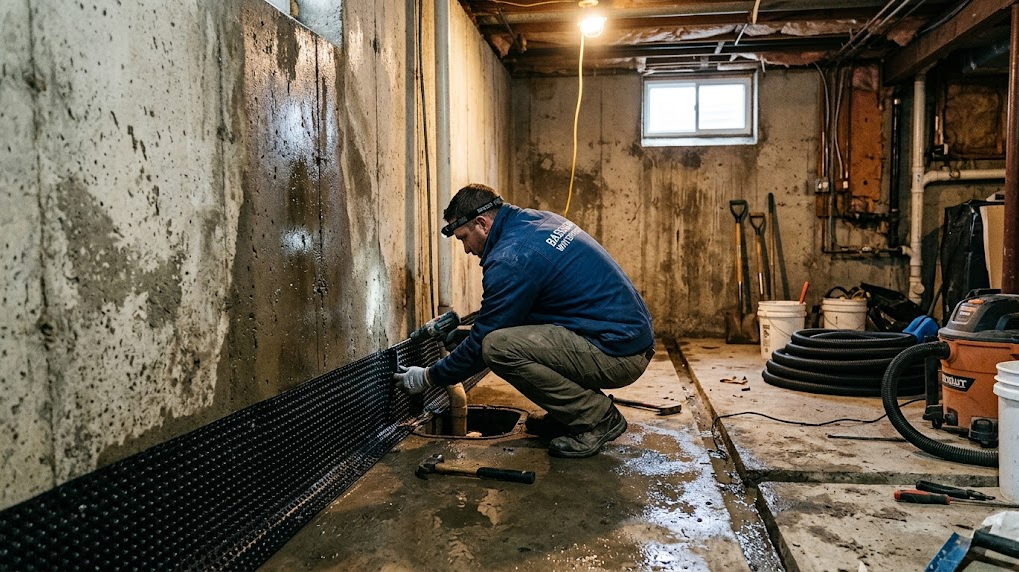
Upload photos of drain tile installations, sump pit and pump setups, crack injections, encapsulated crawl spaces, exterior excavations, and finished results. Include before photos of water and damage. Post updates before the wet season about sump pump checks, gutter cleaning, and grading, and after major storms about inspections and emergency availability.
2. Get Basement Waterproofing Leads From Google Maps
Searches like “basement waterproofing near me” and “wet basement repair [city]” often display a local pack. During wet weather, these positions can produce a flood of calls.
How Google ranks local waterproofing companies
Relevance, distance, and prominence drive Google’s local rankings. Your categories, services, and content shape relevance; your location relative to the searcher shapes distance; and reviews, links, and mentions shape prominence. According to Google, money cannot buy a better local position.
Strengthen relevance service by service
If you want more crawl space or sump pump leads, list those services, upload matching photos, and build strong pages for them on your website. Each signal tells Google what you do.
Build prominence locally
Earn reviews steadily, keep listings accurate, and build relationships with home inspectors, real estate agents, plumbers, remodelers, basement finishing contractors, restoration companies, and local organizations. These partners refer leads and create mentions and links.
3. Rank Your Waterproofing Website in Google’s Organic Results
Organic search is where homeowners research what is causing their wet basement and what to do about it. A site that ranks for symptoms, solutions, costs, and local searches earns trust and brings in leads without paying for each click.
Research waterproofing keywords
Group keywords by the homeowner’s situation and intent.
- Symptom keywords: water in basement after rain, wet basement floor, basement leaking where floor meets wall, musty basement smell, white powder on basement walls, damp basement.
- Solution keywords: interior drain tile, exterior basement waterproofing, sump pump installation, crack injection, crawl space encapsulation, basement dehumidifier.
- Cost keywords: basement waterproofing cost, sump pump installation cost, crawl space encapsulation cost.
- Contractor keywords: basement waterproofing company, waterproofing contractor near me, crawl space repair company.
- Emergency keywords: flooded basement help, sump pump failed, water coming into basement now.
- Location keywords: basement waterproofing [city], wet basement repair [city], sump pump installer [city].
Contractor, emergency, and location keywords bring fast calls. Symptom and cost keywords bring homeowners who are researching, and helpful answers turn many of them into inspections.
Build pages for each solution
Create dedicated pages with URLs such as /basement-waterproofing/, /interior-drainage/, /exterior-waterproofing/, /sump-pumps/, /crack-repair/, /crawl-space-encapsulation/, /dehumidifiers/, and /yard-drainage/. Each page should explain the problem it solves, how you diagnose it, the installation process, materials and equipment, warranties, what affects cost, project photos, related reviews, and a clear way to request an inspection. A sump pump page, for example, should cover pump types, battery backups, alarms, discharge lines, and maintenance.
Create location pages around local conditions
Water problems depend on local soils, water tables, rainfall, and housing. A strong location page describes the conditions common in that area, such as clay soils that hold water, high water tables near rivers, older fieldstone or block foundations, or neighborhoods with known drainage issues; local permit notes; projects completed there; and reviews from local homeowners. Pages that only swap the city name look like doorway pages and rarely rank.
Write titles and descriptions that calm and convert
An effective title might read “Basement Waterproofing in Rochester, NY | Free Inspections, Lifetime Transferable Warranty | [Company Name],” with a meta description such as “Water in your basement? Our Rochester team finds the source, explains your options, and installs proven drainage and sump systems. Schedule an inspection.” Change offers and warranty terms to match what you provide.
Match pages to intent
“Water in basement after rain” results reward clear explanations of causes and next steps. “Interior vs exterior waterproofing” results reward balanced comparisons. “Basement waterproofing cost” results reward realistic ranges. Build each page to serve its intent better than current results, using your own photos and experience.
Keep the site fast and usable during storms
Homeowners searching during a storm are on phones and stressed. Make sure pages load fast, the phone number is tappable, and inspection forms are simple. Use HTTPS and monitor Search Console for issues.
Connect symptoms to solutions
Link symptom articles to the matching solution pages, solution pages to cost guides and the inspection page, and location pages to the services available there.
4. Create Basement Waterproofing Content That Generates Leads
Waterproofing content works when it helps homeowners understand where water comes from, what their options are, and how much it costs, then guides them toward an inspection.
Explain symptoms and causes
Write detailed guides for common symptoms: water where the wall meets the floor, seepage through cracks, wet walls after rain, water around windows, efflorescence, musty odors, condensation, and puddles near the floor drain. Explain causes such as hydrostatic pressure, clogged or missing drain tile, poor grading, gutter and downspout problems, window well issues, high water tables, and plumbing leaks. Help homeowners tell the difference between condensation and seepage with simple tests.
Connect moisture and mold
Many homeowners worry about mold in damp basements. The EPA states that “the key to mold control is moisture control,” advises drying water-damaged areas within 24 to 48 hours to prevent mold growth, and recommends sloping the ground away from the foundation so water does not enter. Content that explains these principles, and how waterproofing and dehumidification address the moisture source, is accurate and useful. Avoid exaggerated health claims, and refer homeowners with significant mold to qualified professionals.
Explain the financial stakes accurately
Homeowners often do not realize how expensive water damage can be or how limited insurance coverage may be. FEMA’s FloodSmart program notes that just one inch of water in an average-size home can cause roughly $25,000 of damage. FEMA’s National Flood Insurance Program materials state that basements receive limited coverage under flood insurance and list finished basement improvements among the items not covered. Coverage for seepage and sump pump failures under homeowners policies varies, so advise homeowners to review their own policies with their insurer. Content that explains these facts clearly helps homeowners see waterproofing as protection, not just a repair.
Compare solutions honestly
Useful comparisons include interior versus exterior waterproofing, drain tile versus sealants, pedestal versus submersible sump pumps, battery versus water-powered backup pumps, and crawl space encapsulation versus vapor barriers. Explain when each fits, its limits, and its cost range. Honest comparisons separate you from competitors who push one solution for every home.
Publish cost guides
Cost guides should explain local ranges and what drives cost: linear feet of drainage, foundation type, wall condition, access, excavation depth for exterior work, sump pump type, backup systems, and permits. Update them yearly.
Write for basement finishing plans
Homeowners planning to finish a basement need it dry first. Content such as “how to waterproof a basement before finishing” and “what to do before finishing a basement” reaches homeowners making a large investment who want to protect it, and it creates referral relationships with remodelers.
Give crawl spaces their own content track
Crawl space problems show up differently from basement leaks. Homeowners notice musty smells in the house, cold or sagging floors, high indoor humidity, insects, or standing water under the home. They search for crawl space moisture, crawl space smell, and crawl space encapsulation cost. Dedicated content explaining vapor barriers, encapsulation, crawl space drainage, dehumidification, and how these connect to comfort and floor health reaches a large group of homeowners that basement-focused competitors often ignore.
Cover exterior water management
Many basement leaks start outside the house. Gutters that overflow, downspouts that dump water next to the foundation, flat or reversed grading, and window wells without drains all push water toward basement walls. Content that explains how to check these issues, and when an inexpensive fix such as downspout extensions or regrading is enough, builds trust. Homeowners remember the company that told them a $300 fix might solve the problem, and they call that company when a larger solution is needed.
Plan seasonal content
Before spring, publish content on snowmelt, sump pump testing, and gutter cleaning. Before hurricane or storm season, publish content on backup pumps and flood preparation. In fall, cover leaf-clogged gutters and grading. After major rain events, publish guidance on what to do with a wet basement.
5. Use Google Local Services Ads to Generate Waterproofing Leads
Google has expanded Local Services Ads to many home service categories, and waterproofing or foundation-related categories may be available in your market. Check availability before planning around them.
How Local Services Ads work
Google describes Local Services Ads as a way to receive leads directly from potential customers through calls and messages, paying only for leads related to your business and services. Leads may include calls, messages, booking requests, and returned missed calls.
Verification and setup
Before any ad runs, Google vets the business, and depending on the market and category that can mean license, insurance, and background checks. If your category is available, choose job types carefully, set a realistic service area, keep hours accurate, and build reviews.
Manage LSA leads around weather
Raise budgets before and during wet seasons if crews have capacity, and track which leads become inspections and contracts. Keep job types and areas precise, since Google no longer credits leads for job types or areas you do not service.
6. Run Google Search Ads for Waterproofing Leads
Search ads let waterproofing companies appear instantly for urgent and high-intent searches, which matters most during and after heavy rain.
When Search ads make sense
Use Search ads during wet seasons and after storms, to promote specific services such as crawl space encapsulation or sump pump backups, to expand into new areas, or to support SEO while it builds.
Separate urgent and planned campaigns
Run separate campaigns for emergency searches, such as flooded basement and sump pump failed, and planned searches, such as basement waterproofing company and crawl space encapsulation. Each needs different budgets, ad copy, and landing pages.
Respond to weather in real time
Watch forecasts and raise budgets in affected areas when heavy rain or rapid snowmelt is expected. Lower them when crews are booked out, so you do not pay for leads you cannot serve promptly.
Use negative keywords
Common waterproofing negatives include jobs, careers, salary, DIY, how to, paint, spray, sealant products, hardware store, roof, deck, boat, phone, and watch. The word “waterproofing” appears in many product searches, so review search terms often.
Write ads that reassure
Waterproofing ads should mention inspections, proven systems, warranties, financing, and experience, and should avoid fear-based language. Use call assets for urgent searches.
Measure cost per inspection and per contract
Import calls and forms as conversions, and upload signed contracts where possible. The numbers that decide a campaign’s fate are cost per completed inspection and cost per signed contract.
7. Build a Basement Waterproofing Review Strategy
Homeowners know waterproofing can be expensive and that results only show up in the next heavy rain. Reviews from customers whose basements stayed dry are among the most persuasive proof you can offer, and they also contribute to local prominence.
What homeowners look for in waterproofing reviews
Homeowners look for honest diagnosis, clear explanations, fair pricing, clean installations, and, above all, a basement that stayed dry afterward. Reviews written after the first major storm following installation carry special weight.
Ask twice
Ask after installation, when the homeowner sees a clean, professional job. Then follow up after the next significant rain or snowmelt with a quick check-in, and invite a review or an update if the basement stayed dry.
Make reviewing easy
Send a text or email with a direct review link, include a QR code in the warranty packet, and have crew leads mention it at completion. Ask every customer.
Encourage helpful detail
Invite customers to describe the problem, the solution, and how the basement has held up, in their own words. Photos of a dry basement after a storm help future customers.
Respond to every review
Thank customers and reference the project. Respond to complaints quickly and professionally, especially if a customer reports water after installation, and show how your warranty process works.
Follow FTC rules
Since October 2024, federal rules from the FTC have banned fake and bought reviews, rewards that depend on a review being positive, and the use of threats or intimidation to keep negative reviews down. Its separate guide for marketers cautions against inviting only the customers you expect to be pleased.
8. Capture Waterproofing Leads After Heavy Rain and Snowmelt
Water problems reveal themselves during wet weather, so waterproofing demand spikes around heavy rain, rapid snowmelt, and tropical storms. The companies that prepare before these events capture most of the demand.
Prepare before the wet season
Have emergency, sump pump, and wet basement pages live and indexed well before the wet season. Update your Business Profile with seasonal posts and confirm hours and emergency coverage. Prepare ad campaigns and landing pages so they can launch quickly.
Respond quickly during events
When heavy rain hits, homeowners call several companies. Staff the phones, return calls fast, and give honest timelines for inspections. If you cannot inspect quickly, offer practical advice for limiting damage in the meantime, such as moving belongings, running a wet vacuum, and drying areas within 24 to 48 hours as the EPA recommends to prevent mold.
Publish timely, helpful guidance
After a major storm, publish posts and Business Profile updates on what to do with a wet basement, how to tell seepage from a plumbing leak, and how to prevent the next flood. Useful advice builds trust even with homeowners who are not ready to hire.
Promote sump pump backups before storms
Sump pumps often fail during heavy storms because of power outages or overload. Promote battery backup systems, pump inspections, and alarms ahead of storm season, when homeowners are thinking about protection.
Avoid fear-based marketing
Homeowners dealing with water are stressed. Explain risks accurately, avoid inflated claims about health or structural danger, and recommend only what the inspection supports. The FTC advises consumers to check that contractors are licensed and insured and to get multiple written estimates, so make it easy to verify your credentials and provide detailed written proposals.
Win leads from home sales and inspections
Water staining, efflorescence, or a missing sump pump on a home inspection report can stall a sale. Buyers want to know what it will cost to fix, sellers want to resolve it quickly, and agents want a contractor who responds within the inspection window. Build a page for real estate situations that explains how quickly you can inspect, what your written report includes, whether your warranty transfers to the new owner, and how you work with both sides. Relationships with home inspectors and agents can turn this into a steady, weather-independent lead source.
9. Turn Google Traffic Into Waterproofing Leads
Waterproofing visitors arrive worried and skeptical. The site’s job is to explain the problem, show credible solutions, and make the inspection easy to book.
Make the inspection offer clear
Explain what the inspection includes, such as moisture readings, a walk-around for grading and gutters, checks of the sump system, a written report, and photos, along with whether it is free and how long it takes.
Show your process
Outline what happens from the first call through inspection, proposal, installation, and warranty registration. Knowing what comes next makes a worried homeowner far more willing to book.
Display trust signals
Show licensing where required, insurance, years in business, manufacturer certifications for drainage or encapsulation systems, warranty terms including transferability, financing options, and review ratings.
Use real projects
Before-and-after photos, short videos of installations, and project stories with the town, problem, and solution make your expertise tangible.
Keep forms simple and allow photos
Ask for contact details, address, a short description, and photo uploads of water, cracks, or damage. Photos help your team prepare.
Offer several ways to reach you
Provide calls, forms, texts, and online scheduling. During storms, make sure every channel gets a fast response.
10. Build Dedicated Waterproofing Landing Pages
Landing pages turn paid clicks into inspection requests by focusing on one problem and one offer.
What a high-converting waterproofing landing page includes
- A headline that mirrors the search, such as “Wet Basement Repair in Akron, Inspections This Week.”
- The service area near the top.
- A tap-to-call number beside an unmissable “Book an Inspection” button.
- A short explanation of likely causes.
- The solutions you offer, explained simply.
- Reviews from customers with similar problems.
- Before-and-after photos.
- Warranty details and transferability.
- Financing options.
- Credentials and insurance.
- Answers to common questions.
- A brief form that accepts photos and loads quickly on phones.
Build pages by problem and solution
Create landing pages for wet basements, flooded basements, sump pump installation, crawl space encapsulation, crack repair, and basements being prepared for finishing.
11. Build a Basement Waterproofing Lead Funnel From Google
Mapping the funnel shows where waterproofing leads are lost.
The waterproofing funnel step by step
- A homeowner notices water or dampness and searches for answers.
- Your content, profile, or ad appears.
- They read about causes, solutions, and costs.
- They check reviews, warranties, and credentials.
- They request an inspection.
- Your office confirms the visit and asks where the water appears and when.
- Your inspector diagnoses the source and explains options.
- You deliver a written proposal.
- The homeowner reviews options and signs.
- Your crew installs the system.
- You register the warranty, check in after the next major rain, and request a review.
Find the leaks
Weak visibility during storms keeps you from being seen. Slow callbacks lose urgent leads to competitors. Inspectors who push one solution for every home lose skeptical buyers. Proposals without clear explanations lose to companies that educate. And companies that never follow up lose homeowners who wanted to think it over until the next storm.
12. Track Your Basement Waterproofing Leads From Google
Tracking shows which channels produce inspections and signed contracts, and how weather affects results.
Track calls and forms
Use tracking numbers by source, conversion tracking for inspection requests and photo uploads, and record sources in your CRM. Google’s guidelines allow a tracking number as the primary Business Profile number when your main local number is listed as an additional number.
Track organic, Maps, and paid performance
Use Search Console, Google Analytics 4, and the Business Profile performance report to see which symptom and solution pages bring leads. Where your CRM allows it, send signed contracts back into Google Ads as offline conversions.
Connect leads to contracts and weather
Record each lead’s source, problem, location, inspection, proposal value, signed revenue, and the weather event that triggered it, if any. The table below follows 100 waterproofing leads from first contact to signature.
| Stage | Count | Rate from previous stage |
| Leads from Google | 100 | – |
| Qualified leads | 80 | 80% |
| Completed inspections | 60 | 75% |
| Proposals presented | 42 | 70% |
| Signed contracts | 18 | 43% |
| Add-ons sold (backups, dehumidifiers) | 7 | 39% of signed customers |
Comparing results across wet and dry months shows how much budget to hold in reserve for storm periods.
13. Basement Waterproofing SEO Metrics That Actually Matter
Waterproofing companies should measure Google performance by inspections and contracts, using rankings and traffic as supporting indicators.
Rankings for symptoms, solutions, and locations
Track rankings for symptom, solution, cost, and contractor keywords in each town, including map pack positions. Symptom rankings show whether you reach homeowners at the start of their search.
Traffic to symptom and solution pages
Watch traffic to wet basement, sump pump, and crawl space pages, especially around weather events.
Inspection requests and completed inspections
Count inspection requests by source and how many become completed inspections.
Proposal close rate and average contract value
Track how many proposals become signed contracts and the average value by solution type and channel.
Cost per inspection and per contract
For paid channels, measure cost per completed inspection and cost per signed contract.
Seasonal performance
Compare lead volume, costs, and close rates between wet and dry periods to plan budgets and staffing.
Revenue and return by channel
Measure each channel’s revenue and gross profit against what you spent on it. SEO’s return tends to grow as content ranks and keeps bringing leads in every wet season.
14. Common Mistakes Waterproofing Companies Make With Google
Waterproofing contractors who struggle with Google leads tend to repeat certain mistakes. Most are fixable within a season.
Waiting for the storm to start marketing
Pages and campaigns launched during a storm are too late to rank. Prepare before the wet season.
One page for every solution
Interior drainage, exterior waterproofing, sump pumps, and crawl space work each need their own page.
Duplicate city pages
Pages that swap only town names rarely rank. Add local conditions, projects, and reviews.
Fear-based content
Exaggerated claims about mold or structural failure damage trust. Explain risks accurately.
Misleading insurance claims
Suggesting insurance will cover waterproofing or seepage damage when coverage is limited creates angry customers. Give accurate guidance.
Keyword-stuffed business names
A profile named “Best Basement Waterproofing Columbus” violates Google’s guidelines and can be suspended right when the rain starts.
Ignoring or buying reviews
Thin review profiles lose jobs, and purchased reviews risk FTC enforcement and Google penalties.
Weak negative keywords
“Waterproofing” ads can match product, roof, and phone searches. Build strong negatives and review search terms often.
Sending paid traffic to the homepage
Paid visitors convert better on landing pages that match their problem.
Slow responses during storms
Urgent leads go to whoever answers first. Staff for peak periods.
Pushing one solution for every home
Homeowners compare inspections. Companies that tailor recommendations win more trust and contracts.
No follow-up after proposals
Many homeowners delay until the next storm. Follow up respectfully, especially before the next wet season.
Hiding warranty details
Warranty terms and transferability matter to homeowners and buyers. Explain them clearly.
Measuring traffic instead of contracts
Traffic matters only when it produces inspections and contracts. Report on revenue first.
15. How Much Does It Cost to Get Basement Waterproofing Leads From Google?
Waterproofing lead costs vary by market, season, solution, and channel. Costs rise during wet periods when competition increases, but contract values can support meaningful lead costs.
Google Business Profile
Google does not bill for a Business Profile. The investment is in optimization, photos, posts, review management, and the website work that supports Maps rankings.
Organic SEO
SEO costs depend on how many solutions and towns you target, competition, website condition, and content depth. Symptom and solution content keeps attracting homeowners every wet season.
Google Search Ads
Expect three costs: the clicks themselves, someone to manage the account, and the pages those clicks land on. Clicks can become expensive during storms, so tight targeting and fast follow-up matter.
Local Services Ads
Where available, total LSA cost equals cost per lead multiplied by lead volume, controlled by a weekly budget.
Calculate your affordable cost per lead
Work it out with three of your own numbers: Average customer value × Gross profit margin × Acceptable acquisition percentage.
If your average waterproofing contract is $7,500, your gross margin is 45%, and you are willing to spend 20% of gross profit on acquisition, you can spend about $675 per signed contract. If 18 of every 100 leads sign, that supports roughly $121 per lead. Add-ons such as battery backups, dehumidifiers, and maintenance plans raise the value of each customer.
16. SEO vs Google Ads vs Local Services Ads for Waterproofing Companies
Each channel plays a different role in waterproofing lead generation.
| Factor | SEO | Google Ads | Local Services Ads |
| Speed | Slower, builds over months | Fast | Fast once verified, where available |
| Long-term value | Compounds every wet season | Stops when spend stops | Stops when spend stops |
| Cost model | Ongoing investment | Per click | Per lead |
| Weather response | Content must be ready in advance | Budgets can rise within hours | Weekly budget adjustments |
| Reach across research | Symptoms through hiring | Mostly urgent and hiring searches | Hiring-stage searches |
| Requires website | Yes | Yes, for landing pages | Not in the same way |
| Best suited for | Year-round research demand | Storm surges and specific solutions | Pay-per-lead calls where offered |
How waterproofing companies combine channels
Content-driven SEO and a strong Business Profile form the year-round base. Search ads capture urgent demand during storms and promote specific solutions. In markets where Local Services Ads cover waterproofing, they contribute calls billed per lead. Partnerships with inspectors, realtors, and remodelers feed all of them.
17. How to Build a Basement Waterproofing Google Lead Generation Strategy
Follow these phases in order so each one supports the next.
Phase 1, Foundation
Optimize the Business Profile, fix listings, set up tracking, install Google Analytics 4 and Search Console, improve site speed, and start a review process.
Phase 2, Commercial SEO
Build pages for each solution, location pages for key towns, and cost guides.
Phase 3, Symptom and research content
Publish symptom, cause, comparison, mold and moisture, insurance, and basement finishing content linked to solution pages.
Phase 4, Local authority
Grow reviews, build citations, and develop relationships with inspectors, real estate agents, plumbers, remodelers, and restoration companies.
Phase 5, Paid acquisition
Launch Search ads and, where available, Local Services Ads with separate urgent and planned campaigns and weather-aware budgets.
Phase 6, Sales process and measurement
Improve inspections, written proposals, and follow-up, and track inspections, contracts, revenue, and cost per contract by channel and season.
18. 90-Day Basement Waterproofing Google Lead Generation Plan
Start this plan two to three months before your wettest season.
Plan by month
| Timeframe | Focus | Key actions |
| Month 1, weeks 1-2 | Audit and tracking | Business Profile audit, website and technical SEO audit, keyword research by symptom and solution, call and form tracking |
| Month 1, weeks 3-4 | Quick wins | Optimize Business Profile with project photos, rebuild solution pages, clarify inspection offer and warranty, start review requests |
| Month 2 | Expansion | Publish symptom, cause, crawl space, and cost content, build location pages around local conditions, clean up citations, reach out to inspectors and agents |
| Month 3 | Lead generation | Launch urgent and planned Search campaigns, set up Local Services Ads where available, build landing pages, set storm budgets, add proposal follow-up |
What to expect by day 90
Paid campaigns and profile improvements show results first, while research content builds through the wet season. By day 90 you should know your inspection rate, close rate, and cost per signed contract by channel.
Basement Waterproofing Google Lead Generation Checklist
Use this checklist to find gaps in your waterproofing company’s Google presence.
Checklist by area
| Area | Items to check |
| Google Business Profile | ☐ Claimed and verified ☐ Accurate primary category ☐ Relevant secondary categories ☐ Full solutions list ☐ Realistic service area ☐ Project photos ☐ Seasonal and storm posts ☐ Review process |
| Website | ☐ Mobile-friendly ☐ Fast loading ☐ HTTPS ☐ Click-to-call number ☐ Clear inspection offer ☐ Photo upload form ☐ Solution pages ☐ Location pages ☐ Warranty and financing info |
| SEO and content | ☐ Symptom content ☐ Cause and comparison content ☐ Crawl space content ☐ Cost and insurance content ☐ Seasonal calendar ☐ Internal linking ☐ Local links |
| Paid | ☐ Urgent and planned campaigns ☐ Local Services Ads where available ☐ Negative keywords ☐ Weather-aware budgets ☐ Landing pages ☐ Conversion tracking |
| Sales and measurement | ☐ Storm staffing plan ☐ Written inspection reports ☐ Proposal follow-up ☐ GA4 and Search Console ☐ CRM ☐ Revenue by season and channel |
Why Basement Waterproofing Companies Choose Click Metrica for Google Leads
Waterproofing owners spend wet seasons running inspections and installs, and dry seasons catching up, which leaves little time for SEO. Click Metrica, the publisher of this guide, is an SEO agency that helps basement waterproofing contractors and other local service businesses rank in Google Search and Google Maps and turn that visibility into inspection requests and signed contracts.
How Click Metrica supports waterproofing contractors
Every engagement begins with a close look at your profile, site, rankings, and local competitors. From there, the work covers what waterproofing companies need: solution pages for drainage, sump pumps, crack repair, and crawl spaces; location pages built around local soils and water tables; symptom and research content published before the wet season; technical fixes; citations and local links; review process guidance; and tracking that connects rankings to inspections and contracts across seasons.
White hat SEO that holds up in every season
Click Metrica works strictly within Google’s published guidelines. No keyword-stuffed business names, no fake reviews, no bought links, and no ranking guarantees. A waterproofing system is judged by how it performs in the next storm, and a marketing program should be judged the same way, by results that keep holding.
Straightforward pricing and a free audit
Click Metrica’s monthly plans start at $1,000 for foundational local SEO, with $2,000 and $3,000 tiers adding more content, optimization, and authority building for competitive regions. The process begins with a preliminary site review and a 30-minute strategy call, and a tailored proposal usually arrives within 48 hours. To learn where your waterproofing company is losing leads, get a free SEO audit at https://clickmetrica.com/contact/.
Frequently Asked Questions About Getting Basement Waterproofing Leads From Google
How do waterproofing companies get leads from Google for free?
Organic rankings and a well-run Business Profile generate leads without media costs, and Google charges nothing for the profile. The investment goes into optimization, content, photos, and reviews.
How do I get my waterproofing company on Google Maps?
Verify your Business Profile, choose accurate categories, list every solution you offer, add project photos, collect reviews, and support the profile with strong website pages. Google’s local rankings weigh relevance, distance, and prominence.
How much does a basement waterproofing lead from Google cost?
It depends on the market, season, and channel. Organic and Maps leads carry no per-lead fee, Search ads bill per click, and Local Services Ads, where offered, bill per lead. Costs rise during storms, when demand and competition increase.
Is Google Ads worth it for basement waterproofing?
It can be very profitable when campaigns separate urgent and planned searches, follow the weather, use strong negative keywords, send clicks to matching landing pages, and measure signed contracts.
How long does waterproofing SEO take to work?
Profile improvements can bring more calls within weeks. Organic rankings usually take several months, so start well before the wet season. Research content keeps bringing leads for years.
What content brings in waterproofing leads?
Symptom guides, cause explanations, solution comparisons, cost guides, mold and moisture content, insurance explainers, and basement finishing content reach homeowners throughout their research.
How do I get more leads after heavy rain?
Have emergency and wet basement pages ready, update your Business Profile quickly, raise ad budgets in affected areas, staff the phones, and publish helpful post-storm guidance.
How do I get more sump pump leads?
Build detailed sump pump and backup pages, publish content about pump failures and power outages, promote inspections and backups before storm season, and run sump pump campaigns.
How do I get crawl space encapsulation leads?
Create dedicated crawl space pages and content about moisture, odors, sagging floors, and humidity, show before-and-after photos, and target crawl space keywords in ads.
How do I rank in the Google 3-pack for waterproofing?
Use accurate categories and services, add photos regularly, gather and respond to reviews, earn local links, and support the profile with strong solution and location pages. Google says paying cannot improve local rank.
How many reviews does a waterproofing company need?
There is no fixed number. Match or exceed competitors in your local pack over time, with detailed reviews that mention dry basements after storms.
Does insurance cover basement waterproofing?
Waterproofing is generally treated as maintenance or improvement. FEMA’s flood insurance materials state that basements receive limited coverage and list finished basement improvements as not covered, and homeowners policies vary on seepage and sump pump failures. Homeowners should review their policies with their insurer.
Should waterproofing companies use SEO or Google Ads?
Most benefit from both. Ads capture urgent demand during storms, while SEO reaches homeowners throughout their research and lowers lead costs over time.
How do I track waterproofing leads from Google?
Use call tracking, conversion tracking for inspection requests and photo uploads, Google Analytics 4, Search Console, Business Profile data, and ad reports. Record each lead’s source, problem, and outcome in your CRM.
How much should a waterproofing company spend on Google marketing?
Base the budget on contract value, margin, close rate, seasonality, and growth goals, and hold some budget in reserve for storm periods.
Final Takeaway, Building a Predictable Basement Waterproofing Lead Engine From Google
Waterproofing leads from Google follow a clear path: water appears, the homeowner searches, finds an explanation they trust, requests an inspection, receives a clear proposal, and signs. Each step can be measured and improved.
Be ready before the water arrives
The waterproofing companies that win on Google combine local SEO, symptom and solution content, Maps, reviews, weather-aware Search ads, Local Services Ads where available, partnerships, conversion work, and tracking into one system. With one inch of water capable of causing roughly $25,000 of damage, homeowners have every reason to act. The companies that are visible and trusted before the next storm will get the call.
Get a free basement waterproofing lead generation audit
Want more waterproofing inspections and contracts from Google? Get a free basement waterproofing SEO and lead generation audit from Click Metrica at https://clickmetrica.com/contact and see exactly where your company is losing leads and what to fix first.